System Design & Distributed Systems: The Complete Guide
Consensus algorithms, caching strategies, database internals, networking protocols, and architecture patterns for large-scale systems.
Networking & Protocols
How data moves across the wire — from TCP/UDP to HTTP evolution and DNS.
What Happens When You Type a URL: The Complete Production Guide
Request lifecycle from DNS through TCP, TLS, CDN, and load balancing — with production latency debugging at every layer.

TCP vs UDP vs QUIC: Protocol Selection Under Production Load
What head-of-line blocking costs, how QUIC solves it, and how to choose the right transport for real-time and API workloads.

HTTP/1.1 vs HTTP/2 vs HTTP/3: The Protocol Evolution Guide
How HTTP evolved from sequential text to multiplexed binary streams over QUIC. What each version solves and when to upgrade.

DNS Records: The Complete Production Guide for Backend Engineers
Every DNS record type for production: A, CNAME, MX, TXT, CAA, SRV. TTL failover math, SPF/DKIM/DMARC, GeoDNS, and DNSSEC.

Data Infrastructure
Database internals, indexing, caching, and migrations at scale.
PostgreSQL Query Planner Internals: From EXPLAIN to Expert Tuning
How PostgreSQL's query optimizer decides, why it gets it wrong, and how to fix it with statistics targets and covering indexes.
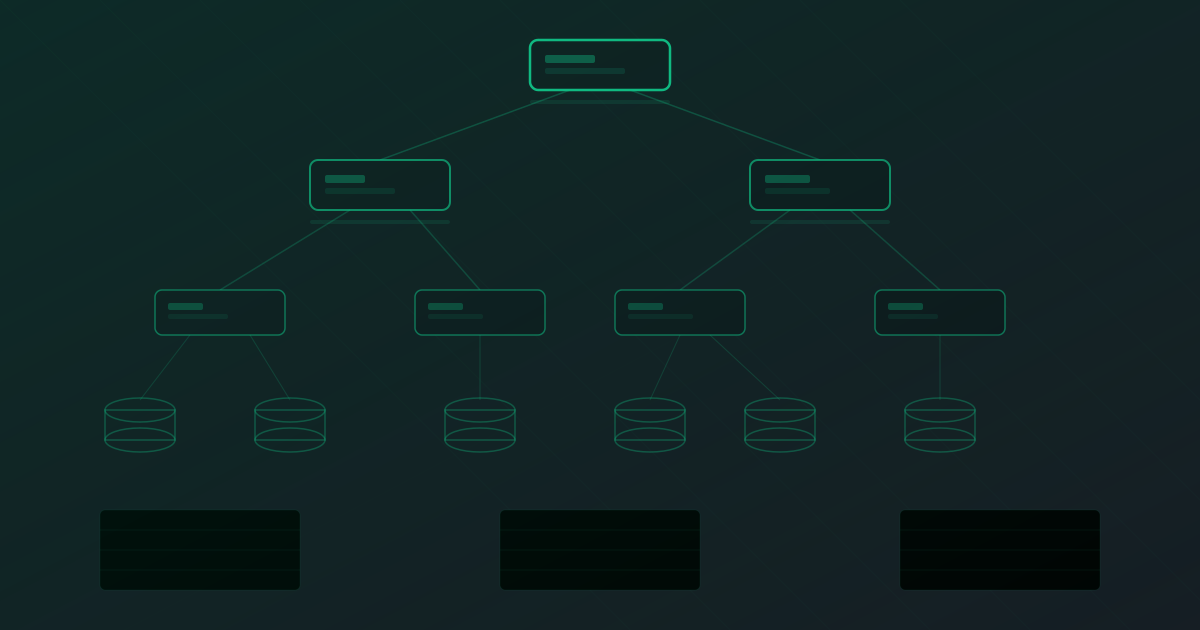
Database Indexing Strategies: B-Trees, GIN, GiST, and Production Tuning
B-tree internals, composite index ordering, GIN for full-text search, partial indexes, and preventing index bloat in production.

Caching Strategies at Scale
Four caching patterns with Go: cache-aside, write-through, write-behind, stampede prevention, and event-based invalidation.
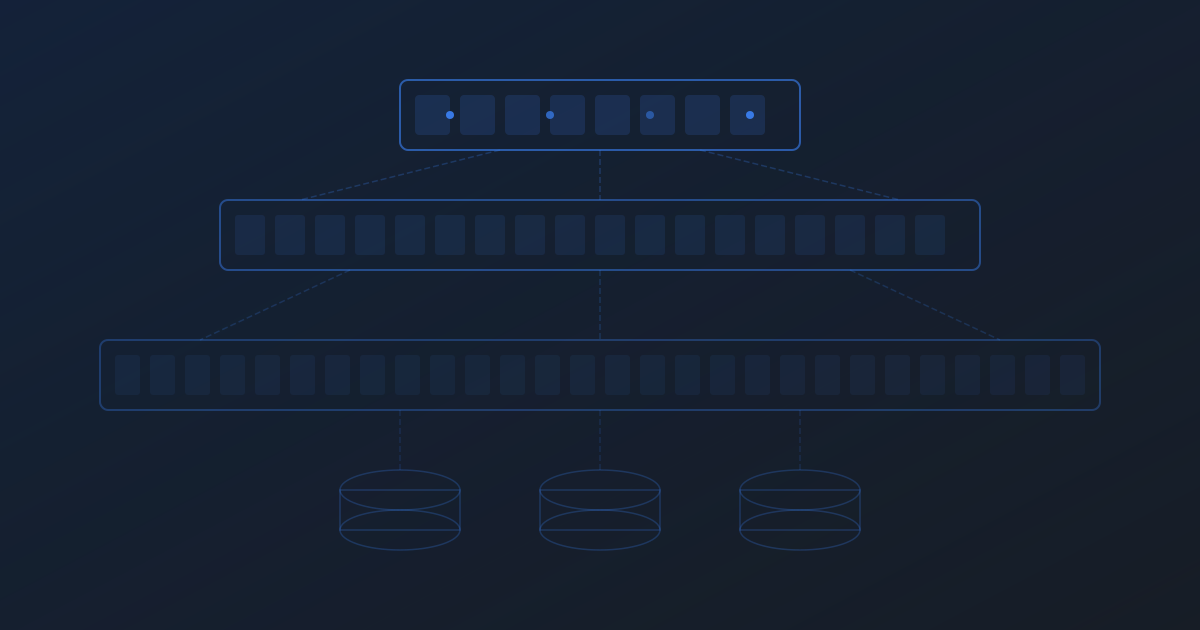
Scaling Redis for High-Throughput Systems
Scale Redis: cluster sharding, hot key replication, connection pooling, pipelining, and eviction tuning for 1M+ ops/sec.
Zero-Downtime Database Migrations at Scale
Schema migrations on billion-row tables without downtime: expand-contract, pg_repack, gh-ost, blue-green migrations, and rollbacks.
Distributed Systems Patterns
Consensus, rate limiting, messaging, idempotency, and microservice architecture.
Understanding Raft Consensus: The Algorithm That Keeps Your Database Honest
How Raft works in production: leader election, log replication, safety guarantees, and failure modes in etcd and CockroachDB.
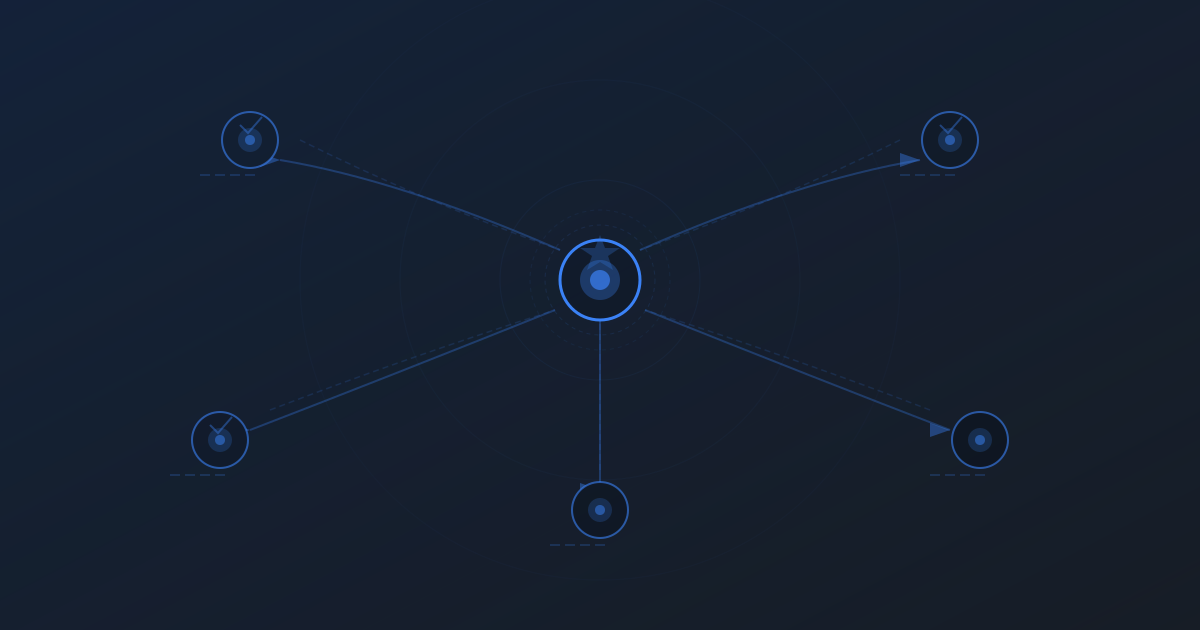
Consistent Hashing: The Algorithm Behind Every Scalable Distributed System
Adding one cache server shouldn't invalidate every key. Consistent hashing with virtual nodes and bounded loads — full Go and Java implementations.

Rate Limiter Algorithms: Token Bucket vs Sliding Window
Five rate limiting algorithms, their trade-offs, how to distribute them across a fleet, and client-side backoff that works.

Distributed Rate Limiting at Scale: The Probabilistic Drop Architecture
Probabilistic drop rate limiting: uncoordinated enforcement bypassing Redis for 1M+ RPS with zero coordination overhead.

Idempotency Patterns: Building Retry-Safe Distributed Systems
Why exactly-once is a myth, and how idempotency keys, database constraints, and the outbox pattern make retries safe in Go and Java.

Kafka vs RabbitMQ vs NATS vs SQS: Choosing the Right Message Broker
Kafka vs RabbitMQ vs NATS vs SQS: delivery semantics, ordering, throughput, ops complexity, and a decision framework with Go code.

Microservices Architecture: From Monolith to Production-Ready Services
When to decompose a monolith, how to define boundaries, and the patterns that work: API gateways, sagas, and event-driven comms.

REST vs gRPC vs GraphQL: A Production Decision Guide
How a team serving mobile, microservices, and third-party integrations ended up running REST, gRPC, and GraphQL together.
